
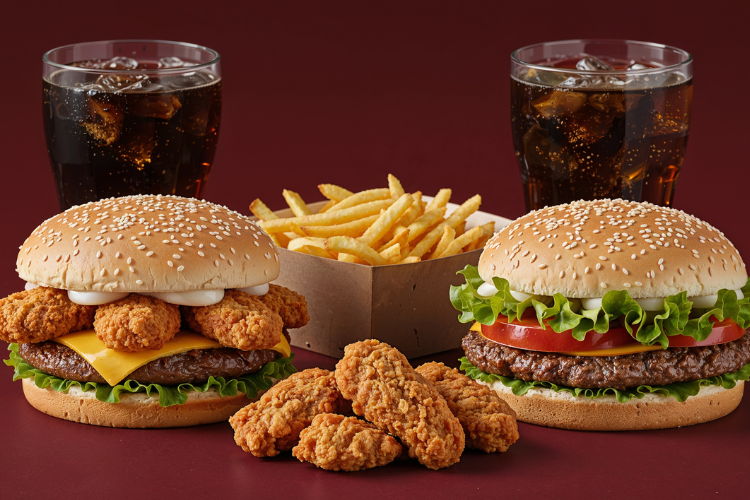
The Strategy Behind Every Great Fast Food Deal
In the competitive world of quick service restaurants (QSR), standing out is key. While many factors contribute to a restaurant’s success, two strategies have proven to be incredibly effective at driving sales and keeping customers happy: the meal deal and the limited time offers (LTO). These aren't just random promotions; they are carefully designed tools that tap into what customers want most: value, variety, and a good reason to visit a fast food chain.
So, why are these simple-looking offers so successful? The answer lies in consumer psychology and smart business tactics. They provide a win-win situation, offering customers more for their money while boosting a brand's bottom line. By understanding the data and the vision behind these promotions, QSR brands can meet their customers' changing needs.
How Meal Deals Drive Value and Volume
Meal deals have become a staple on every quick service restaurant menu. Instead of buying a burger, a side of fries, and a drink separately, customers can get them all together in a single package. This simple act of bundling creates a sense of greater value.
One of the key reasons restaurant meal deals are so popular is that they make the decision-making process easier for the customer. With so many choices on a fast food menu, a pre-packaged deal takes the guesswork out of the equation. It's a quick, convenient, and predictable option that customers can rely on.
Data shows just how important this strategy is. According to recent reports, the share of meal deals in fast food restaurants has been growing steadily. For example, in the UK, meal deal offers made up a larger portion of sales in the first quarter of 2025 compared to the previous year.
This shows that even with rising prices, consumers are still drawn to these bundled offers. In some cases, like with pizza chains, meal deals saw a slight price drop, which led to a significant increase in their sales share. This highlights the powerful link between offering great value and achieving substantial sales growth.
Furthermore, fast food deals encourage customers to spend more than they might have initially planned. A customer might come in just for a sandwich, but the deal convinces them to add a side and a drink, increasing the total order value. This subtle upselling is a core benefit for the restaurant. It increases the average transaction amount without making the customer feel like they are overspending, because they perceive the bundled price as a good deal.
The Impact of Limited Time Offers
If meal deals are about consistent value, then limited time offers are about creating excitement and urgency. These are special menu items or deals that are available for a short period, and their temporary nature is a huge part of their appeal.
LTOs serve several strategic purposes for QSR brands:
- Driving Urgency: The "here today, gone tomorrow" nature of LTOs encourages customers to act quickly. They know that if they wait, they will miss out on the chance to try a new, exciting product. This sense of urgency can drive a sudden rush of traffic to a restaurant, leading to a significant increase in sales during the promotional period.
- Keeping the Menu Fresh: LTOs allow restaurants to experiment with new flavors and products without a long-term commitment. Burger chains, for instance, often use LTOs to introduce new unique combinations, while coffee shops use them to roll out seasonal flavors like a pumpkin spice latte in the fall. This continuous innovation keeps the brand from feeling stale and gives customers a reason to keep coming back.
- Attracting New Customers: A new LTO can generate buzz on social media and in the news, attracting new customers who might not have visited the restaurant otherwise. It can also bring back old customers who are curious to try the new offer. For example, some chains have seen a nearly doubling of their LTOs offered as meal deals, showing that they are a key part of the marketing and sales strategy.
- Providing Value for the Modern Consumer: In today’s economic climate, where consumers are more budget-conscious, LTOs are a way for brands to offer something new and exciting at a price that feels manageable. Recent data suggests that many QSRs are pricing their LTOs lower than before, with more offers priced under £5. This strategy directly responds to the consumer's demand for better value. By combining the excitement of a new product with an attractive price point, LTOs become an irresistible offer.
The Synergy: How Meal Deals and LTOs Work Together
While meal deals and LTOs are powerful on their own, they are even more effective when used together. A brand can create a limited time offer that is also a meal deal, combining the value of a bundle with the urgency of a temporary promotion. This strategy is proving to be a highly successful way to boost sales and consumer engagement. The number of LTOs that are also meal deals has nearly doubled, proving that this combination is a winning formula.
In conclusion, the success of meal deals and limited time offers in the quick service restaurant industry is no accident. They are essential tools for a brand's growth and marketing strategy. By providing convenience, value, and excitement, they not only increase sales but also build customer loyalty and keep a brand relevant in a fast-paced market. For any QSR looking to stay ahead, embracing the power of the package and the pull of a limited offer is a crucial step towards long-term success.
For almost 20 years, 3S POS has offered one of the most flexible EPOS systems to international brands such as Caffe Concerto, Chaiiwala, Heavenly Desserts, Pepe’s Piri Piri, GDK and thousands more delighted customers.
If you are looking for an Restaurant POS System that will not just help you accept payments but includes staff management, inventory management, multi-site management, loyalty programs, and much more, speak to our sales for a free demo.
.svg)