
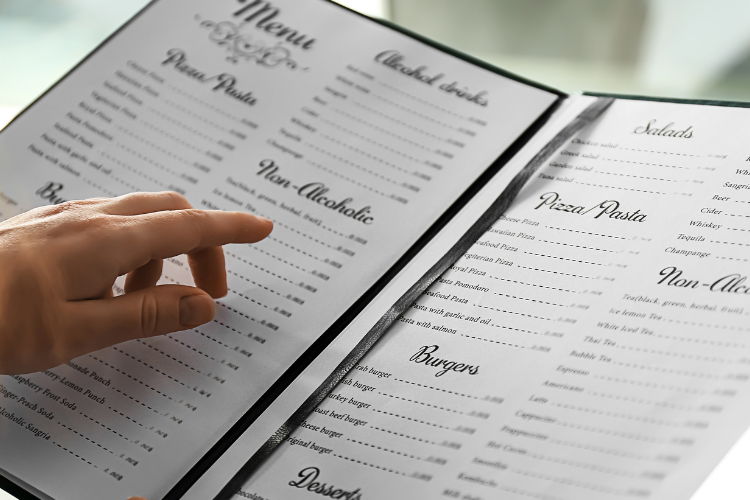
In a restaurants, a menu is far more than just a list of dishes and prices. Think of it as your key silent salesperson. It is an important part of your customers' dining experience.
When someone picks up your menu, they start to form an opinion about your restaurant, your food, and the vibe you want. In the UK, we love our diverse food scene. Getting your restaurant menu design right is not just nice – it is essential for success.
This guide will walk you through the essential steps and considerations for crafting an exceptional menu. We will look at how to balance aesthetics with usefulness. Your menu should clearly represent your brand. It should also attract customers to try your products.
Whether you are opening a new restaurant or updating your menu, understanding menu design is important. It can improve your profits and make your diners happier.
The Role of a Restaurant Menu
Your menu serves multiple vital functions within your restaurant. It's the main point where your kitchen meets your customer. It is a marketing tool and helps create a great restaurant experience.
Menu as a Marketing Tool
Think of your menu as a miniature billboard for your restaurant. It's one of the first things customers interact with, and it has the power to convey your restaurant's personality, concept, and culinary focus. A well-designed menu can highlight your unique selling points, showcase your signature dishes, and subtly influence customer choices.
For instance, strategically placed images, appealing fonts, and carefully crafted dish descriptions can elevate the perceived value of your dishes. Consider how a descriptive phrase like "slow-braised, succulent lamb shank with a rich rosemary jus" sounds far more enticing than simply "lamb shank." This attention to detail transforms a restaurant menu from a mere list into a persuasive marketing instrument. It’s an opportunity to create desire and guide your customers towards the dishes you want to promote, be they popular dishes or higher-profit items.
Creating an Experience Through Design
Beyond simply listing food, your menu contributes significantly to the overall ambiance and customer experience. The tactile feel of the paper, the binding, the cleanliness, and the visual appeal all contribute to how a customer perceives your restaurant. A high-quality menu signals a high-quality establishment, while a flimsy, outdated, or poorly printed menu can suggest a lack of attention to detail.
Moreover, the way you design your menu can influence the pace and enjoyment of the meal. A cluttered or confusing menu can lead to frustration and indecision, whereas a clear, well-organised menu can make ordering a pleasure. The goal is to make the process of choosing food an enjoyable part of the dining experience, not a chore.
Understanding Your Audience
Before you even begin to think about fonts and colours, it's crucial to understand who you're designing for. Your menu should resonate with your target clientele.
Knowing Your Target Customers
Who are your ideal customers? Are they budget-conscious students, affluent foodies, families with young children, or business professionals? Their demographics, preferences, and dining habits should heavily influence your menu's content and design. For a casual cafe, a simple, straightforward menu might be perfect, whereas a fine-dining establishment would likely opt for a more sophisticated and detailed presentation.
Consider the price point that aligns with your target audience's expectations. If your customers are seeking value, your menu should reflect that with clear pricing and potentially combo deals. If they're looking for an upscale experience, the pricing structure and presentation should reflect that premium. Researching menu example restaurant designs from establishments that cater to a similar audience can provide valuable insights.
Catering to Dietary Preferences
In today's diverse culinary landscape, accommodating various dietary preferences is no longer just a courtesy; it's a necessity. Vegetarians, vegans, gluten-free diners, and those with allergies are a significant part of the market in the UK. Your menu should clearly indicate options suitable for these diets.
This can be done through clear labelling (e.g., "V" for vegetarian, "VG" for vegan, "GF" for gluten-free) or by dedicating specific sections of your menu to these choices. Providing a separate, easily accessible allergy information sheet is also highly recommended. Failing to cater to these needs can alienate a significant portion of potential customers and negatively impact their dining experience. A welcoming and inclusive menu encourages a wider range of patrons to enjoy your restaurant's menu.
Designing an Easy-to-Read Restaurant Menu
Once you understand your audience, the next critical step is to ensure your menu is easy to navigate and understand. No matter how delicious your menu items are, if customers struggle to read or find what they're looking for, their experience will suffer.
Layout and Structure
A well-structured menu guides the customer's eye logically. Most menus follow a traditional flow: starters, main courses, desserts, and drinks. However, within these categories, you can use visual cues to highlight certain dishes or sections.
Think about design choices like using the "golden triangle" in menu design. Customers usually look first at the top right, then the center, and finally the top left. Placing your most profitable or signature dishes in these areas can increase their visibility.
Avoid overcrowding the page. Too much text, too many images, or too many options can overwhelm diners. Embrace white space to give your menu a clean and inviting appearance. This allows each dish to stand out and makes it easier for customers to process the information.
Organising Menu Items
Create a restaurant menu with logical grouping of menu items. Group similar dishes together, such as all pasta dishes, all grilled meats, or all seafood. This makes it intuitive for customers to browse and compare options. Within these groups, consider ordering items by price, popularity, or culinary style.
Using clear headings and subheadings for each section will also enhance readability. For example, "Starters," "Salads," "Main Courses," "From the Grill," and "Desserts" all provide immediate clarity. The goal is to reduce the cognitive load on your customers, allowing them to focus on making a delicious choice rather than deciphering your menu's organisation.
Using Menu Templates
For new restaurant owners or those seeking a fast and professional option, restaurant menu templates can be very helpful. There are many online resources and software programs. They offer templates that you can customise with your restaurant's branding, dishes, and prices. These templates often incorporate best practices in design and layout, saving you time and ensuring a polished final product.
While templates provide a great starting point, remember to personalise them to reflect your unique brand identity. Change fonts, colours, and images to truly make the template your own. The key is to leverage the structure provided by a template while infusing your restaurant's personality.
Importance of Clear Dish Descriptions
Your dish descriptions are where your food truly comes to life on the page. They should be evocative, informative, and enticing. Use descriptive adjectives that appeal to the senses – "crispy," "creamy," "succulent," "aromatic," "zesty." Include key ingredients and preparation methods to give customers a clear idea of what they're ordering.
However, avoid overly long or overly flowery descriptions that might bore or confuse customers. Aim for conciseness and clarity. For example, "Pan-seared salmon with roasted asparagus and lemon-dill sauce" is much more effective than a lengthy paragraph about the salmon's journey from the sea. Highlighting the origin of key ingredients (e.g., "locally sourced") can also add perceived value and appeal, particularly in the UK market where provenance is often appreciated.
Easy Navigation for Customers
Ultimately, the goal of your design is easy navigation for customers. They should be able to quickly find what they're looking for, understand their options, and feel confident in their choices. This includes:
- Legible Fonts: Choose fonts that are easy to read, even in low light conditions. Avoid overly decorative or small fonts.
- Appropriate Font Size: Ensure the font size is large enough for comfortable reading for all ages.
- Good Contrast: Text colour should contrast sharply with the background colour.
- Logical Flow: As mentioned, a natural progression through sections.
- Clear Pricing: Set prices clearly and consistently.
- Visual Cues: Use icons, dividers, or subtle shading to separate sections or highlight special items.
A well-designed menu allows customers to browse effortlessly, leading to a more pleasant and efficient ordering process.
Menu Items Selection
The items you choose to feature on your menu are the heart of your restaurant. This selection process involves a blend of culinary creativity, understanding customer demand, and shrewd business acumen.
Identifying Popular Dishes
Analysing your sales data is crucial for identifying your popular dishes. These are your bestsellers, the items that consistently resonate with your customers. These dishes often represent your restaurant's core identity and are a strong reason why customers return. Ensure these popular items are prominently featured on your menu, perhaps with special icons or highlighted sections.
However, don't be afraid to experiment. While some dishes may be consistently popular, customer tastes evolve. Regularly reviewing what sells well and what doesn't can help you refine your offerings.
Including Seasonal Dishes
Incorporating seasonal dishes is a fantastic way to keep your menu fresh and exciting. Leveraging seasonal produce not only allows you to offer the freshest and most flavourful ingredients but can also be more cost-effective. Customers in the UK increasingly appreciate restaurants that champion seasonal and local produce, aligning with sustainability trends and supporting local suppliers.
Seasonal dishes also provide an excellent opportunity for marketing. Announcing new seasonal specials creates buzz and gives customers a reason to revisit. It shows that your kitchen is dynamic and responsive to the availability of fresh ingredients.
Balancing Food Costs and Variety
When curating your restaurant's menu, a critical consideration is food costs. Each dish needs to be priced strategically to ensure profitability while remaining attractive to customers. Understanding the cost of ingredients for each item is fundamental to setting appropriate menu prices.
Beyond cost, offering a good variety of menu items is important to cater to diverse tastes without overwhelming customers. A common mistake is having too many dishes, which can lead to increased food waste, higher inventory costs, and slower kitchen operations. Aim for a balanced menu that offers enough choice to appeal to a broad audience but remains manageable for your kitchen staff. A focused menu often allows for higher quality and consistency in execution.
Updating Your Menu
A static menu can quickly become stale. Regularly updating your menu is crucial for maintaining customer interest, adapting to changing tastes, and staying competitive.
Keeping Your Menu Fresh
Think of your menu as a living document. It should evolve with your restaurant, your customers, and the culinary landscape. This doesn't mean a complete overhaul every month, but rather a strategic approach to keeping things exciting. This could involve:
- Introducing "specials": Daily or weekly specials allow you to test new dishes and offer variety without permanently changing your core menu.
- Seasonal changes: As discussed, rotating seasonal dishes keeps things fresh and utilises the best produce.
- Refining existing dishes: Even your popular dishes might benefit from small tweaks or improvements based on customer feedback or new culinary techniques.
The goal of keeping your menu fresh is to give customers a reason to return and to demonstrate your commitment to innovation and quality.
Incorporating Food Trends
The food industry is constantly evolving, with new food trends emerging regularly. From plant-based diets and sustainable sourcing to specific cuisines and innovative preparation methods, staying abreast of these trends can offer valuable opportunities.
Consider how you can subtly incorporate relevant food trends into your menu without completely abandoning your core identity. For example, if plant-based eating is a strong trend in your area, you might add a couple of innovative vegan options rather than just a basic salad. However, always ensure that any trend you incorporate aligns with your brand and appeals to your target audience. Don't jump on every bandwagon; choose trends that genuinely fit your concept.
Timing for Seasonal Updates
The timing of your seasonal updates is critical. Align your menu changes with the natural availability of produce. For example, summer menus will have lighter dishes and fresh berries. In winter, menus will focus on heartier meals and root vegetables.
Planning these updates in advance allows for proper sourcing, recipe development, staff training, and marketing. Announcing seasonal menu changes early can create excitement amongst our customers. This encourages them to visit and try your new dishes.
Digital Options for Modern Dining
In the digital age, physical printed menus are insufficient. Digital menus have become increasingly prevalent, offering convenience, flexibility, and a modern edge to the guest experience.
Benefits of an Online Menu
Having an online menu on your restaurant's website is no longer optional; it's essential. Most customers will check your menu online before visiting, especially if they are new to your establishment. An online menu offers several benefits:
- Accessibility: Customers can view your menu from anywhere, at any time.
- Up-to-date information: It's much easier to update prices, remove sold-out items, or add specials instantly online than to print new physical menus.
- SEO benefits: An online menu helps with your restaurant's search engine optimisation (SEO), making it easier for potential customers to find you when searching for local dining options.
- Visual appeal: You can incorporate high-quality photos of your dishes, which can be incredibly enticing and difficult to replicate cost-effectively on a physical menu.
- Reduced printing costs: While you'll still likely have physical menus, a robust online menu can reduce the frequency and volume of printing.
Ensure your online menu is mobile-friendly, loads quickly, and is easy to navigate on various devices.
Utilising QR Codes for Easy Access
QR code menus gained significant popularity during the pandemic as a contactless solution, and they continue to be a convenient option for many restaurants. By scanning a QR code with their smartphone, customers can instantly access your online menu.
Benefits of QR code ordering include:
- Hygiene: Reduced handling of physical menus.
- Instant updates: Changes to your menu can be reflected immediately without reprinting.
- Environmental friendliness: Less paper waste.
- Enhanced experience: Some QR code menus can link to interactive features, allowing customers to filter by dietary needs, view images, or even place orders directly from their phone.
When implementing QR code menus, ensure the codes are easily scannable and prominently displayed on tables. Also, always have a few physical menus available for customers who prefer them or who may not have a smartphone. This caters to all preferences and ensures a smooth customer experience.
Conclusion
Creating the perfect a restaurant menu design is an intricate blend of art and strategy. It's about more than just listing your dishes; it's about crafting an experience, communicating your brand, and ultimately, enticing your customers to embark on a delightful culinary journey. From understanding your audience and designing for readability to carefully selecting your menu items and embracing digital solutions, every element plays a crucial role.
By regularly updating your menu, incorporating food trends thoughtfully, and paying close attention to both the aesthetics and the practicalities, you can ensure your menu remains a powerful asset for your restaurant. A well-designed, clear, and enticing menu doesn't just inform; it inspires, encourages, and contributes significantly to a memorable dining experience, ensuring customers leave satisfied and eager to return.
For almost 20 years, 3S POS has offered one of the most flexible EPOS systems and Restaurant Payment Solution. Our clients include international brands such as Caffe Concerto, Chaiiwala, Heavenly Desserts, Pepe’s Piri Piri, GDK and thousands more delighted customers.
If you are looking for an Restaurant POS System that will not just help you accept payments but includes staff management, inventory management, multi-site management, loyalty programs, and much more, speak to our sales for a free demo.
.svg)